Treated by doctors who have been the athlete
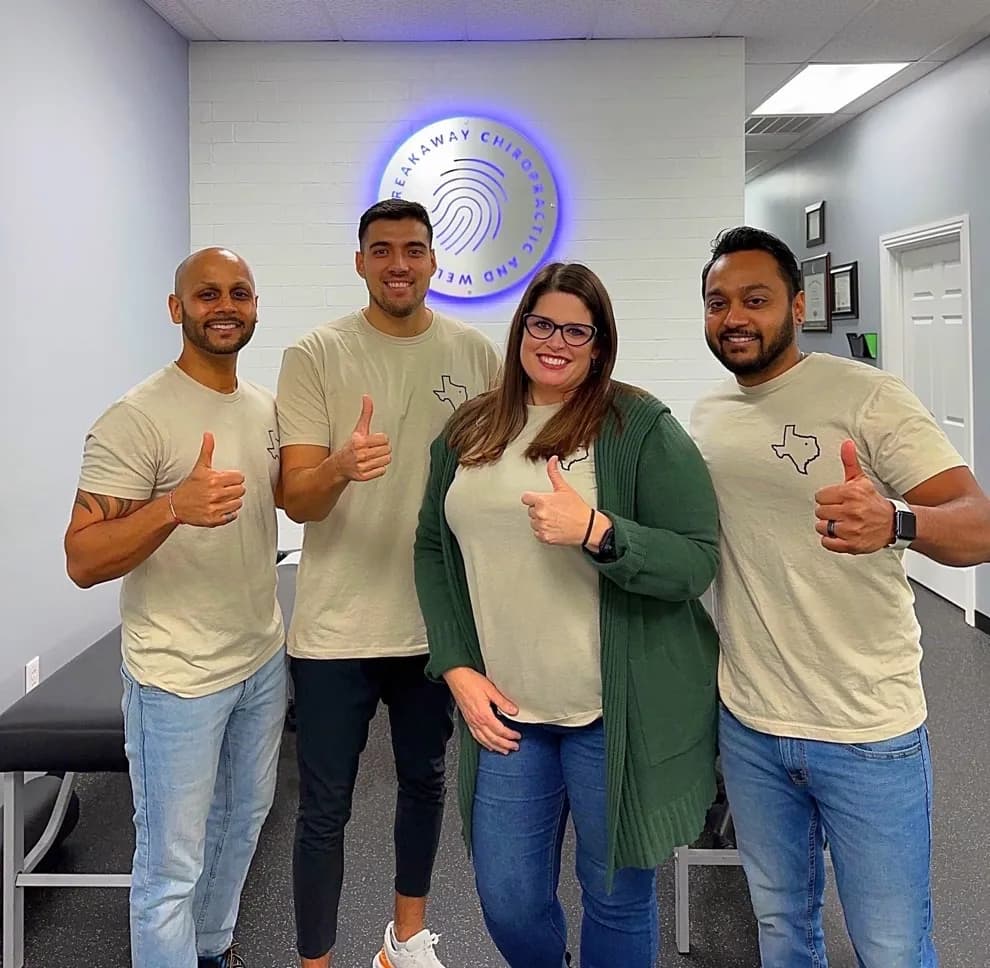
Dr. Rakesh Lad played hockey and soccer from the age of five and captained his high school hockey team. Dr. Hasheen Lad trained at Team USA's developmental hockey camp in 2004 and tore his ACL at fourteen, the injury that pushed him toward healthcare in the first place. He still plays hockey weekly.
That matters more than it sounds. Athletes get frustrated by providers whose only advice is to stop doing the thing they love. Our starting position is the opposite: how do we get you back on the field, the ice, or the mat as fast as is genuinely safe, and how do we keep this from happening again.
Real sideline and team experience
Dr. Hasheen has worked with FC Dallas, UNT Hockey, and competitive gymnasts and figure skaters. Dr. Rakesh has served as a team physician and holds a degree in Kinesiology and Exercise Science from the University of Houston in addition to his chiropractic training from Parker.
Frisco is a serious youth and pro sports town, from the Star and Toyota Stadium down to the club soccer, hockey, and gymnastics programs that fill weeknights. We see those athletes constantly, and we understand the difference between pain that requires rest and pain that requires better mechanics.
How we work with athletes
Athletic care is rarely just an adjustment. A hamstring that keeps pulling is usually a hip that is not extending. A shoulder that keeps impinging is usually a thoracic spine that will not rotate. We assess the whole chain, then combine tools accordingly.
- Adjustments to restore joint motion where the chain is locked up
- Muscle protocol, ultrasound plus instrument-assisted soft tissue work to break down adhesion and scar tissue
- Performance taping for support during competition without restricting range of motion
- Normatec compression to flush the legs after hard sessions and speed recovery
- MLS laser and StemWave for tendon and soft tissue injuries that have plateaued
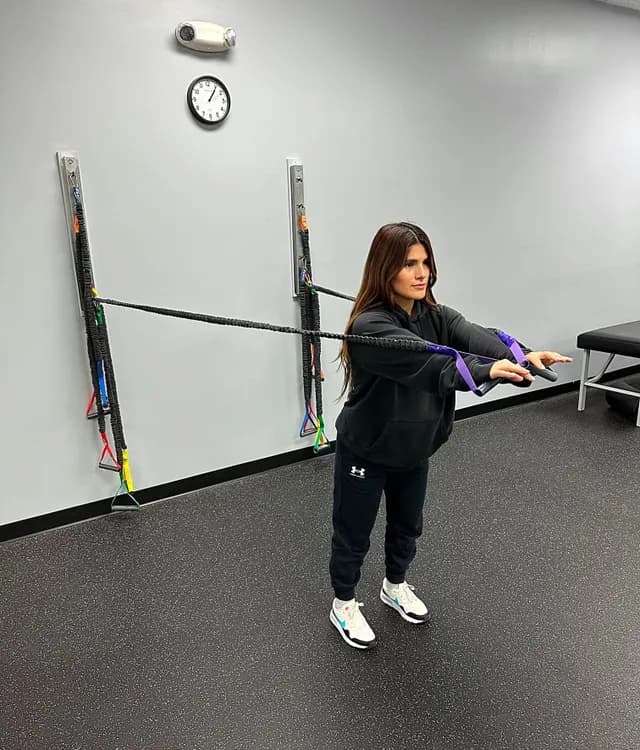
- Functional exercise programming so the correction actually holds under load
Benefits of sports chiropractic & athletic performance
- Faster return to sport after injury
- Improved range of motion, power output, and mechanics
- Reduced risk of recurring soft tissue injuries
- Better recovery between training sessions and games
- Pre-event preparation and post-event flush
- Care from doctors with pro and collegiate team experience
Conditions we use this for
Shoulder Pain
The shoulder trades stability for range of motion, which is exactly why it goes wrong so often, and why local treatment alone rarely fixes it.
Knee Pain
The knee is a hinge stuck between two joints that rotate, so it usually hurts because of what the hip and foot are doing.
Hip Pain
Stiff, weak hips do not stay a hip problem for long. They hand their workload to the low back and the knees.
Tennis Elbow & Golfer's Elbow
Tendon pain at the elbow that grips, lifts, and shakes hands, and that rarely comes from the elbow itself.
Back Pain
The most common reason people find us, and one of the most treatable, once you know what is actually causing it.
Plantar Fasciitis & Heel Pain
That stabbing pain on your first steps out of bed is the most recognizable symptom in musculoskeletal medicine, and one of the most frustrating to wait out.
Sports Chiropractic & Athletic Performance: common questions
Do you treat youth and club athletes?
Constantly. Frisco club soccer, hockey, gymnastics, volleyball, baseball, and football athletes make up a large share of our practice. We adapt technique and force to the athlete's age and skeletal maturity, and we communicate openly with parents about what we find.
Should I get adjusted before or after a game?
Both have a place. Pre-event work is lighter and focused on mobility and activation. Post-event work is about flushing, recovery, and addressing anything that got tweaked. Tell us your competition schedule and we will time your visits around it.
I am not injured. Can chiropractic still help my performance?
Yes. Most performance limits are mobility limits. If your thoracic spine will not rotate or your hips will not extend, your body finds a compensation, and compensations are where injuries start. Regular care addresses those restrictions before they become a strain.
How soon can I train after an adjustment?
Immediately, in most cases. Some patients feel slightly loose for a few hours after their first few visits, so for a heavy lifting day we may suggest a lighter warm-up. We will tell you if a specific finding means you should hold off.